White Wedding Roses Sublimation Clipart: Elegant Design Assets for Creative Projects
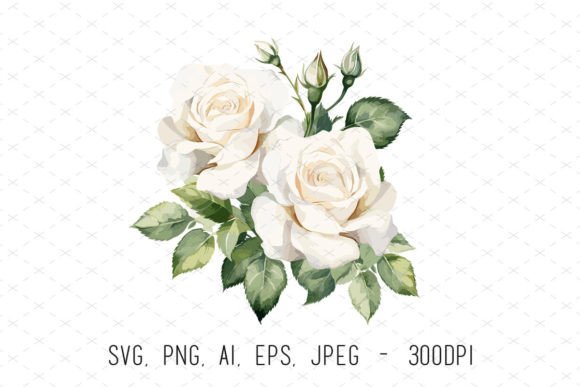
There’s something undeniably classic about white roses. They carry a sense of purity, elegance, and timeless beauty that works across so many different design contexts. When you combine that with the versatility of digital clipart, you get a resource that can elevate everything from wedding invitations to branded merchandise. White Wedding Roses Sublimation Clipart captures that delicate, watercolor aesthetic in a format ready for both digital and physical applications.
Visual Character and Style
These aren’t just generic floral graphics. The watercolor treatment gives each rose a soft, organic feel with subtle variations in tone and texture. You’ll notice gentle gradients, delicate petal details, and that slightly imperfect hand-painted quality that makes watercolor art so appealing. The transparent background means you can layer these elements over any color, pattern, or photo without awkward edges or masking headaches.
At 4500x4500 pixels and 300 DPI, these files are built for serious work. Whether you’re designing a large-format wall art print or scaling down for social media graphics, the resolution holds up. The variety of formats—PNG, SVG, AI, EPS, and JPEG—means you’re covered whether you’re working in Adobe Illustrator, Canva, Cricut Design Space, or virtually any other creative software.
Where These Design Assets Truly Shine
Wedding stationery is the obvious starting point. Save-the-dates, ceremony programs, menu cards, thank-you notes—white roses fit naturally into that entire suite. But limiting this clipart to weddings would be a mistake. Think about branding for florists, spa businesses, or skincare lines that want to communicate softness and sophistication. The roses work beautifully as accent elements in logo design or as recurring motifs across packaging design and social media graphics.
For entrepreneurs and small business owners running print-on-demand shops, this clipart opens up real product possibilities. T-shirts, mugs, tote bags, phone cases, stickers—sublimation printing handles all of these, and having high-quality source files makes the production process straightforward. The transparent PNG format is particularly useful here, letting you drop the roses onto any product mockup without cleanup work.
Practical Applications Beyond the Obvious
- Editorial design for magazine layouts, blog headers, and newsletter graphics
- Web design elements like section dividers, background accents, or featured image compositions
- Paper crafts including scrapbooking, card making, and journal decoration
- Digital products such as printable wall art, planner inserts, or digital stickers
- Event materials for bridal showers, anniversary parties, and garden-themed gatherings
Working With Multiple File Formats
One thing that separates premium font and clipart packages from budget alternatives is format variety. Having SVG and AI files means you can edit paths, adjust colors, and resize without any quality loss. This is essential for designers who need to customize assets for specific brand guidelines or color palettes. The EPS format ensures compatibility with older professional software, while the JPEG option works well for quick previews or projects where transparency isn’t needed.
If you’re using modern typography alongside these roses, consider how the delicate, organic style of watercolor interacts with different typeface choices. A clean sans serif font creates appealing contrast—letting the roses add visual interest while the text remains highly readable. Script fonts can complement the romantic aesthetic, but pairing them requires restraint to avoid visual clutter. Think of the roses as supporting characters in your design hierarchy, not competing with your message.
Evaluating Fit for Your Brand Identity
Before incorporating any design asset into your brand identity, step back and assess alignment. White roses communicate elegance, femininity, romance, and natural beauty. If your brand personality leans toward bold, industrial, or minimalist-modern aesthetics, these might work as occasional accent pieces rather than core visual elements. For brands in beauty, wellness, hospitality, fashion, or lifestyle spaces, they’re a natural fit.
Consistency matters. If you decide to use this clipart across your marketing materials, commit to a cohesive approach. Use the roses in similar sizes, positions, and color treatments across your website, social media graphics, printed collateral, and packaging. This repetition builds recognition and reinforces the visual language you’re establishing.
Practical Tips for Getting the Most Value
- Test at actual size. View your design at the dimensions it will be printed or displayed. What looks balanced on screen might feel crowded or sparse in physical form.
- Experiment with opacity. Reducing the transparency of the roses can create subtle background textures that add depth without overwhelming your primary content.
- Consider color overlays. While the white roses are beautiful as-is, applying a color tint in your design software can help them coordinate with specific brand palettes.
- Mix with other elements. Combine the roses with geometric shapes, line art, or solid color blocks to create more dynamic compositions.
- Check commercial licensing. Always verify the usage terms before selling products featuring the clipart. Most quality packages include commercial use, but specifics vary.
Final Thoughts on Creative Font and Clipart Pairing
Great design often comes down to thoughtful combination. White Wedding Roses Sublimation Clipart provides that versatile decorative layer that can transform a simple layout into something memorable. Whether you’re a crafter working on personal projects, a designer building client presentations, or a small business owner creating product lines, having reliable, high-resolution floral assets in your toolkit saves time and expands creative possibilities.
The real value isn’t just in the files themselves—it’s in how you apply them. Experiment freely, trust your instincts, and remember that the best design choices always serve the story you’re trying to tell.